Jack
Pamela's WarJack, known as Jack the barman, is a staff member at The Woodman Hotel whose practical vigilance helps sustain the household’s intricate mixture of business, family life, secrecy, and wartime improvisation. He is not presented as a major decision-maker, but his recurring interventions make him an important part of the hotel’s operating life: he watches, warns, carries, and assists, turning ordinary service into a form of protection.
Identity and Position
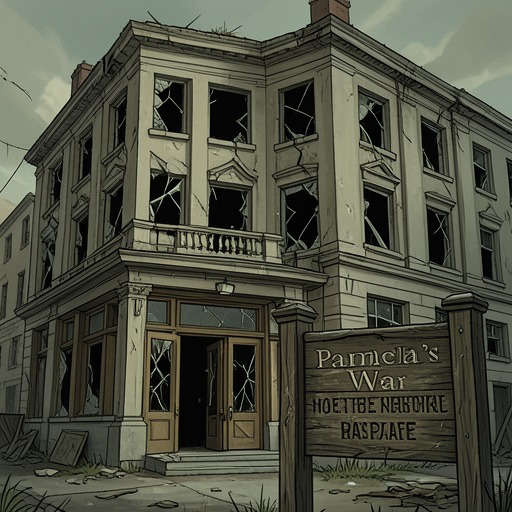
Jack works behind the bar at The Woodman Hotel, a setting where the boundaries between licensed business and domestic life are unusually porous. The hotel is also Pamela Wheeler Fellows’s home, her Father’s livelihood, a meeting place for soldiers and local men, and a vantage point from which the family observes activity around the village. Jack belongs to the working staff, yet his usefulness extends beyond serving drinks. He is trusted with information and with the practical tasks that allow the hotel to function under strict licensing laws and wartime pressure.
His role is defined less by personal biography than by dependable presence. He is repeatedly nearby when something requires discretion: a warning when Pamela Wheeler Fellows’s Father approaches, assistance for men patrolling the hills, and participation in the nightly closing routine demanded by the police station opposite. Through these small but consequential actions, Jack becomes part of the hotel’s informal infrastructure of alertness.
The Lookout for Pamela Wheeler Fellows
Jack’s clearest early function is as Pamela Wheeler Fellows’s lookout during her secret dance lessons. At fourteen, she is technically forbidden to enter the upstairs dining room because the room belongs to premises licensed to sell intoxicating liquor. Nevertheless, when her Father is occupied in the bar and two of her Mother’s gentleman friends are visiting, she practises there and learns to waltz, quickstep, and cha-cha-cha.
Jack is always ready to shout a warning if her Father reappears. At that signal, Pamela Wheeler Fellows can scamper back to her bedroom before being discovered, while her Father remains unaware of what has been happening upstairs. Jack therefore helps create a temporary protected space in which her restricted adolescence can expand into performance, pleasure, and social confidence. The dancing skills acquired under his surveillance later become a lasting resource, remembered as something for which she will be grateful in future years.
The episode also establishes the character’s particular kind of loyalty. Jack does not challenge Pamela Wheeler Fellows’s Father openly, nor does he turn the lesson into a dramatic rebellion. Instead, he performs a brief, precise service at the threshold between permission and prohibition. His warning preserves the household’s outward order while quietly making room for Pamela Wheeler Fellows’s independence.
Hotel Surveillance and Wartime Vigilance
The hotel’s position opposite the police station makes alertness essential. Licensing laws prohibit the sale of alcohol outside permitted hours, and a breach could cost the family its licence and livelihood. From the raised area behind the bar, Pamela Wheeler Fellows can see over the top sash window of the police station. When the Sergeant stands up and puts on his helmet, the staff receive the only warning they need. The cry goes up, the beer pulls are covered with towels, the bar shutters are lowered, and remaining customers are urged to finish their drinks before the Sergeant crosses the road.
Jack’s place in this arrangement is consistent with his wider identity as a watchful barman. The hotel’s survival depends on reading movement before authority arrives, and Jack operates within that collective readiness rather than as an isolated employee. The apparently routine acts of covering beer pulls and closing shutters become a coordinated performance of legality, speed, and concealment. The arrangement works for months, leaving uncertain whether the Sergeant understands that his movements effectively advertise his arrival or merely suspects the hotel’s suspicious preparedness.
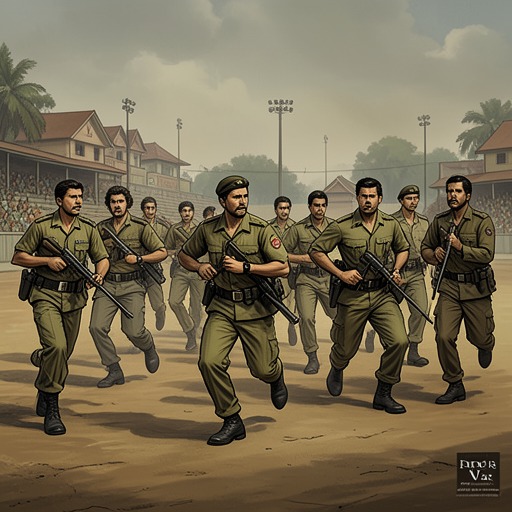
Jack also assists the local Home Guard. The group, made up largely of young men from the village, drills on the field behind the police station under the strict commands of Pamela Wheeler Fellows’s Father. They lack proper uniforms and sufficient weapons, practising with broom handles before rifles and other firearms become more available. Despite these deficiencies, they patrol the hills around Clent at night in case German parachutists land there. On several occasions, Jack is sent up to the hills with a crate of beer so that the patrol can pass the night more pleasantly. The gesture is comic in its practicality, but it also shows how the hotel supplies morale as well as drink: Jack carries a small piece of its hospitality into a landscape transformed by military danger.
Service, Trust, and the Wartime Hotel
Jack’s work belongs to a larger pattern in which the hotel becomes a social and logistical centre during the war. A battalion stationed about half a mile away operates a searchlight against German bombers but cannot cook its rations properly. Pamela Wheeler Fellows’s Mother offers to prepare their joints of meat in the hotel kitchen if the soldiers deliver the food and return at the appointed time to eat it. Jack is not named as the cook or organiser of this arrangement, but his role as barman places him within the same system of service through which the family supports nearby military personnel.
The meals reveal the instability of the hotel’s hospitality. The soldiers eat well, but they also consume substantial quantities of alcohol. After several visits, the journey home becomes a drunken shambles; the sergeant in charge is carried across the fields, loses his stripes during a senior-officer spot-check, and the Company Commander orders the men to stay away from the hotel. Jack’s customary contribution to the Home Guard, carrying beer to men on patrol, thus stands in contrast to the searchlight team’s disastrous drinking. In one context alcohol sustains comradeship during a cold night watch; in the other, it undermines military discipline and ends the relationship between the soldiers and the hotel.
Jack’s significance emerges from this contrast. He is associated with controlled, timely assistance rather than with the excess that brings official punishment. Whether warning the family, supporting patrols, or participating in the bar’s routines, he helps the hotel manage the dangers produced by its own identity as a licensed public house.
Narrative Role and Significance
Jack is a supporting figure whose importance lies in recurrence and function. He links Pamela Wheeler Fellows’s private adolescence to the hotel’s public life: the same man who protects her secret dancing also contributes to the establishment’s wartime readiness. His actions show how survival in the hotel depends on networks of tacit understanding rather than on formal authority alone. The family’s safety and livelihood are repeatedly secured by people who notice the right movement, issue the right warning, or carry the right supplies at the right moment.
He also helps define the hotel as a space that is never merely domestic or commercial. Its bar faces the police station; its dining room becomes a clandestine dance floor; its kitchen feeds soldiers; its staff support patrols on the hills. Jack moves through these changing uses without needing a separate dramatic storyline. His quiet competence embodies the practical solidarity that allows the household to endure as war converts familiar rooms, roads, fields, and workplaces into places of regulation, surveillance, danger, and improvised refuge.